
CEPA underpins Canada's Chemicals Management Plan
The environment in which we live, work and play affects our health and wellbeing, for better or for worse. The air we breathe, the water we drink, the food we eat, and the products we use all have an impact.
One piece of Canadian federal legislation that aims to protect both the environment and our health from toxic substances is the Canadian Environmental Protection Act, 1999 (CEPA), which came into force in 2000.
CEPA provides the legal foundation and oversight for Canada’s Chemicals Management Plan.
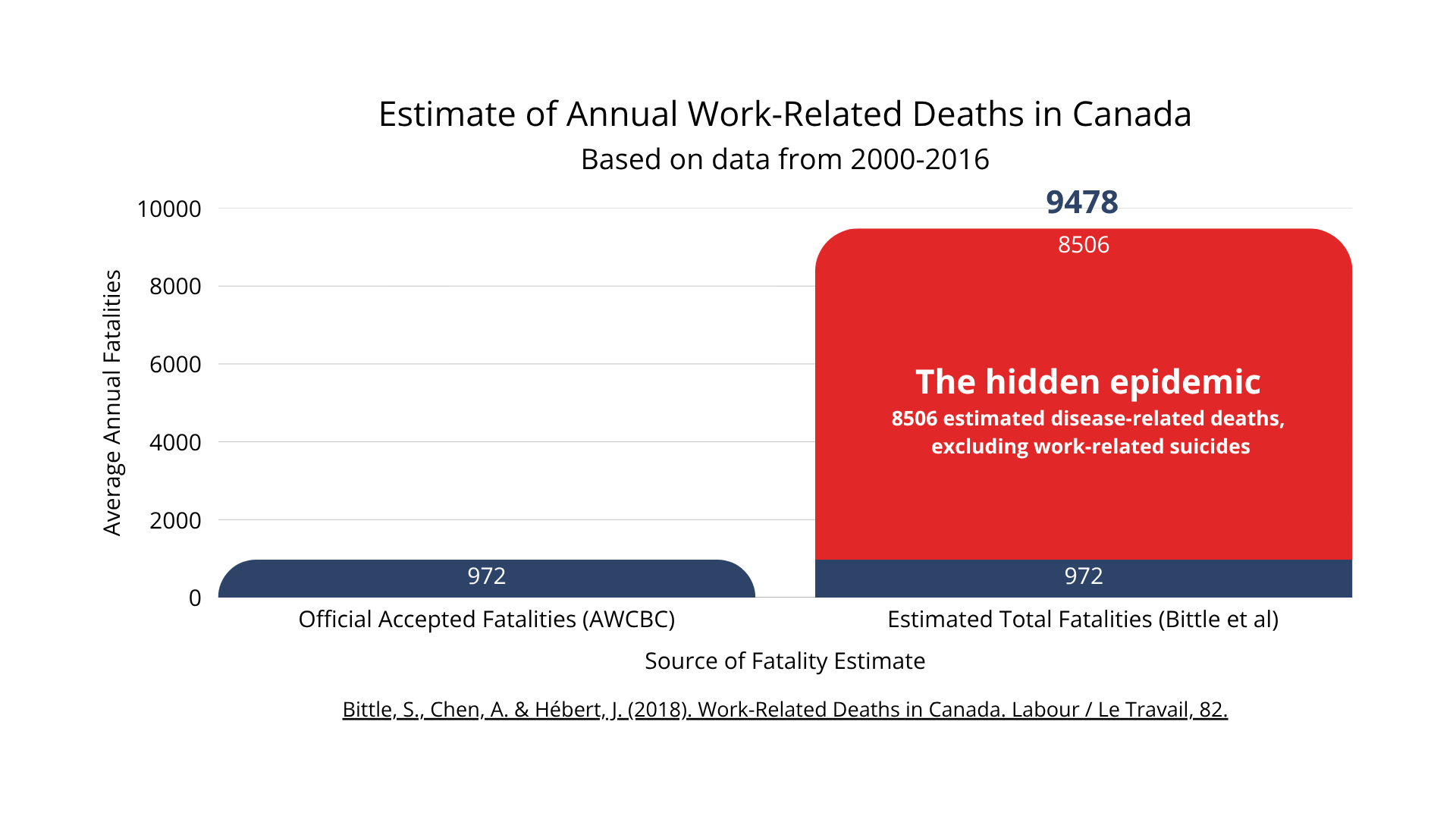
This legislation applies to any activity involving a substance that could pose a risk to the environment or human health. Clearly this includes the workplace – where employees may be exposed to chemical products with serious consequences for their health (and that of their children), today or years in the future – creating a hidden epidemic of occupational disease that can have life-altering or life-ending outcomes.
Yet, I spent 25 years in chemical manufacturing before co-founding SDS RiskAssist in 2016, and in many, many conversations with employers about occupational health and safety, there was a lack of awareness about the application of CEPA, despite their obvious commitment to complying with provincial health and safety (OHS) regulations and WHMIS requirements.
However, employers were very aware of CEPA with regards to environmental oversight, due to its hefty fines of up to $1 million per day and/or imprisonment!
My eventual conclusion was that the act, while setting the expectations for and enforcement of the management of hazardous chemicals that can impact the environment, lacked the teeth to protect people.
This began to change in 2023, when the Government of Canada amended CEPA to recognize the right of all individuals in Canada to a healthy environment.
Understanding CEPA's "Right to a Healthy Environment"
CEPA's Right to a Healthy Environment provisions mean that every individual in Canada has the right to "live in an environment that is protected from harmful substances, pollutants, and waste, and where actions taken under CEPA contribute to:
- clean and healthy air and water
- a sustainable climate
- healthy ecosystems and biodiversity"
The CEPA amendment also outlines clear expectations for employers to protect both people and the planet, with implications for:
- workplace health and safety
- environmental sustainability
- business risk and compliance, and
- corporate responsibility.
Key elements of the Act include:
- Preventing pollution: CEPA requires industries to take proactive steps to reduce pollution at the source—not just cleaning it up after the fact.
- Managing hazardous substances: The Act establishes processes for identifying, assessing, and controlling chemicals and other substances that pose a risk to human health or the environment.
- Environmental monitoring and reporting: Companies are expected to monitor, track, and report on environmental impacts.
- Public participation: Canadians have avenues to raise concerns and provide input on environmental decision-making, reflecting the principle that everyone has a stake in a healthy environment.
Why CEPA matters
For employers, the recognition of a healthy environment as a right is more than a lofty philosophical principle or simply about compliance. It has real-world, practical implications for:
- Worker health & safety: Exposure to hazardous chemicals or environmental hazards is a serious workplace health and safety risk. Occupational diseases like cancer can take 10–25 years to develop, making them harder to diagnose, report and connect back to the workplace. Plus, there's no question that healthy, happy employees are productive employees.
- Legal risk: Non-compliance can mean fines, lawsuits, and reputational damage.
- ESG and corporate responsibility: Investors, employees and customers increasingly expect organizations to operate sustainably. Demonstrating compliance and proactive health and safety and environmental stewardship commitments strengthens morale, productivity and an organization's reputation.
What's new: release of implementation framework (July 2025)
In July, 2025, the Government of Canada took another step forward by releasing the implementation framework for the Right to a Healthy Environment amendment, which includes:
- what the Right to a Healthy Environment means
- how it will be considered in the administration of the Act, and
- the Plan of Priorities for chemicals management
The Plan of Priorities released in July "outlines upcoming initiatives to address chemical substances in Canada. It includes a list of substances to be assessed and elaborates on activities that support the assessment, control, and management of risks posed by substances. This Plan builds on Canada’s existing strong foundation for chemicals management," a press release from Environment and Climate Change Canada states.
The plan of priorities includes a full list of substances prioritized for assessment under CEPA.
Example: Quaternary Ammonium Compounds
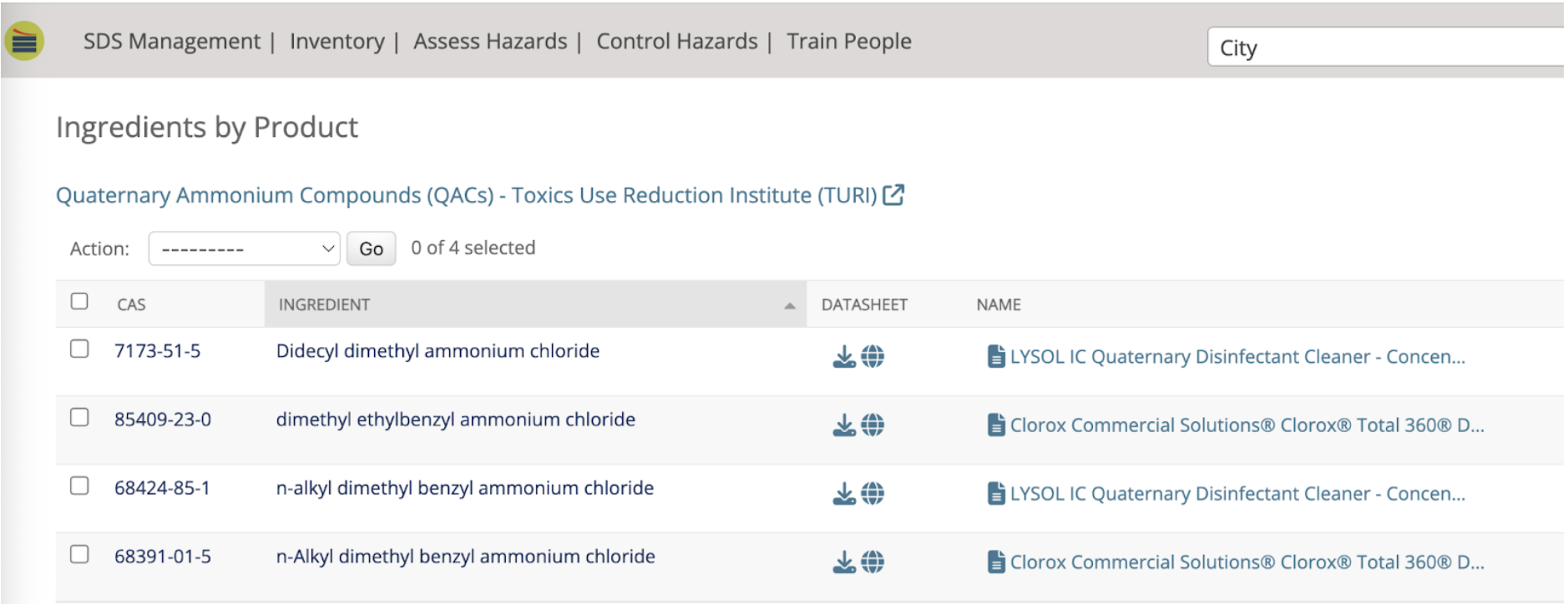
As an example, the CEPA's prioritized substances list includes quaternary ammonium compounds (QACs), also known as 'quats.'
QACs are a large group of chemicals with many common uses including in disinfectants, pesticides, detergents and personal care products.
There is a huge number of these products on the market: in fact, about 65% of the surface disinfectants for emerging viral pathogens are Quat ammoniums (source).
Most QACs are hazardous to aquatic organisms and many QACs are linked to occupational asthma and work-exacerbated asthma.
Identifying QAC hazards in chemical products
Despite the risks posed by QACs, you often won't find QAC hazards on safety data sheets (SDSs).
In Canada, it is optional for suppliers to identify an environmental hazard on an SDS. The reason is that the legislation governing the Workplace Hazardous Materials Information System (WHMIS) falls under the jurisdiction of provincial and federal occupational health and safety legislation. The mandate of these OHS governing bodies does not extend to environmental protection.
Canada chose to adopt all of the United Nation Globally Harmonized System of Classification and Labelling of Chemicals' physical and health hazard classes for mandatory disclosure on SDSs and labels. However, it did not adopt the environmental hazard classes (such as Acute Aquatic Toxicity or Chronic Aquatic Toxicity) as mandatory requirements under the federal Hazardous Products Regulations that govern SDS content.
That said, some suppliers do choose to include environmental hazards on their SDSs, particularly if they are supplying SDSs to both the U.S. and Canada.
With regards to QACs, while there are ample studies that relate QACs to impaired lung function, there needs to be an assessment (like the one Canada is proposing in its CEPA Plan of Priorities) with results that meet the stringent requirements of WHMIS classification, before it can be determined whether they should be labeled as a respiratory hazard on an SDS.
Making a difficult job easier
This example illustrates why it is such a challenge for employers to efficiently identify substances of concern, especially if they're using hundreds or even thousands of chemical products in their workplace.
This is even more difficult if you are using paper SDSs. It's simply not practical to comb through hundreds of pages and manually cross reference ingredients.
The good news? Software can do this heavy lifting for you. The SDS RiskAssist chemical management system includes pre-built lists to instantly pinpoint products with QACs, xylenes (found in paints and coatings, adhesives and sealants, and cleaning agents) and other products on the priorities list.
What employers should do now
- Identify, assess and manage risks: You are required to know what chemicals and materials your business uses—and how to control hazards. See SDS RiskAssist's 10-step risk management process for a simple framework to follow.
- Develop chemical and environmental management policies: Embed hazard prevention and environmental sustainability in your company culture.
- Train your team: Ensure that employees understand the specific chemical and environmental hazards that exist in your workplace, and how to safely handle, store, dispose of them, as well as required reporting procedures.
- Monitor and report: Track your hazard management, emissions, waste, and other environmental metrics—and share results as required.
- Engage your ecosystem:Work with suppliers and partners to ensure environmental responsibility flows through your entire operation.
Moving forward
As environmental protection and human rights continue to intersect, the expectation for workplaces to proactively identify and manage hazardous substances will only grow (see my article on new OSHR requirements in British Columbia, for example.)
By proactively implementing CEPA requirements and fostering a culture of environmental responsibility, organizations will not only meet legal obligations, they’ll contribute to a future where the right to a healthy environment is a reality for all Canadians. This is how you make change.
For more on this topic, see the Guide to Understanding the Canadian Environmental Protection Act.
If you have any questions about CEPA in your workplace, please reach out.